Understanding Mold Growth
Basement mold can affect other parts of a house when spores, dust, and odors move through open stairs, gaps, or connected air systems. That does not mean every upstairs room is contaminated; the building layout and moisture conditions matter.
What to check before cleanup
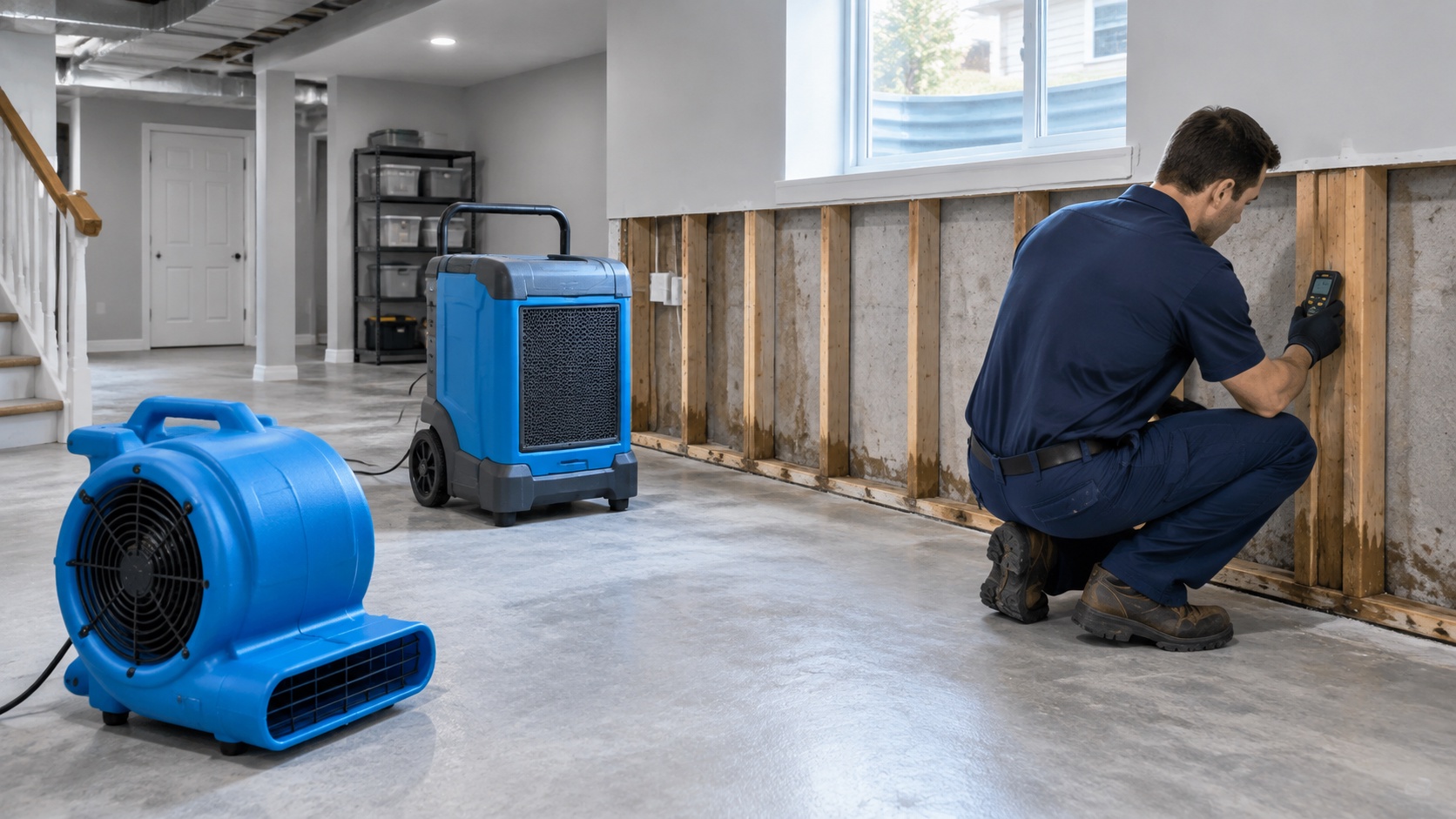
Look for the damp source below before repeatedly cleaning upstairs odors. Leaking plumbing, seepage, condensation, or stored porous materials against wet walls may sustain the problem. Do not blow fans across visible growth to try to remove the smell.
A safe, material-specific response
People with allergies, asthma, or other vulnerabilities may respond differently to indoor exposures. Symptoms alone do not identify a building source. A medical professional can advise on health concerns while a property assessment investigates moisture and affected materials.
Documentation, repairs, and prevention
Reduce unnecessary disturbance, correct the moisture source, and plan contained removal where appropriate. After cleanup, continue checking humidity and repaired areas; odor masking or air fresheners are not substitutes for source control.
Need help at your property?
Elizabeth Restoration serves Elizabeth, Newark, Union, Linden, Rahway, Roselle, Hillside, Cranford, and Westfield. For property-specific next steps, call 908-228-9750. We are open 24 hours, 7 days a week.
This guide is general information, not a substitute for an on-site assessment, medical advice, or your insurer’s coverage decision.