Why Elizabeth's Sewer History Matters to Every Homeowner
A basement backup is not always the same event as groundwater seepage. Water emerging from a floor drain or carrying wastewater needs contamination precautions; clean-looking water is not proof that it is safe. Record where water appeared and whether nearby fixtures were in use.
What to check before cleanup
During an active backup, keep people and pets out of the basement and stop using fixtures that feed the affected line. Do not enter standing water where electrical equipment may be energized. A plumbing assessment is needed to resolve the obstruction or damaged connection.
A safe, material-specific response
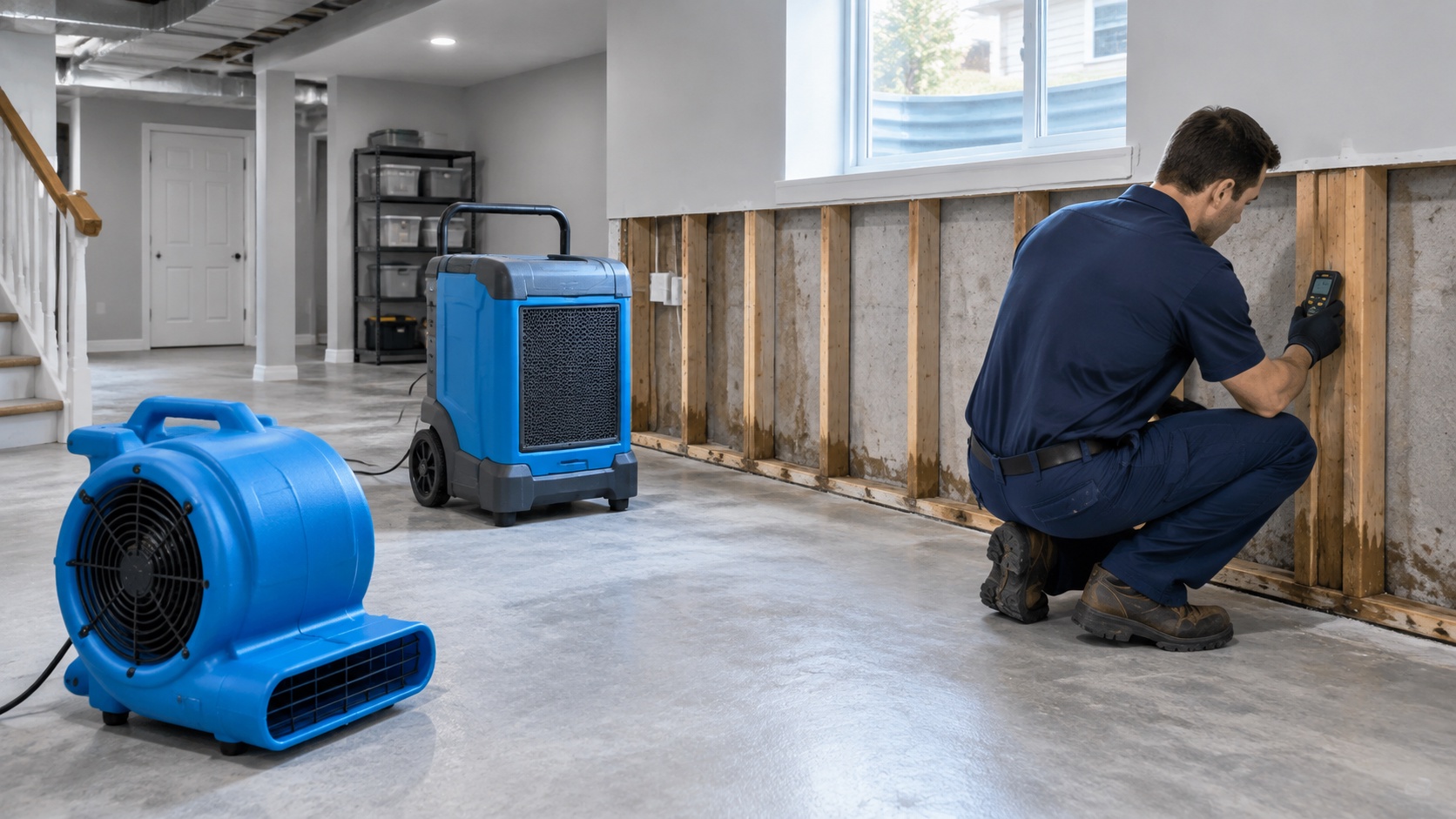
Sewage can enter carpet backing, insulation, and wall bases. Recoverability depends on the material and exposure. Controlled extraction, removal of contaminated porous materials, cleaning of remaining surfaces, and verified drying are separate parts of a proper scope.
Documentation, repairs, and prevention
For the insurance discussion, photograph the entry point and affected rooms from a safe location, keep emergency-work receipts, and ask whether the policy includes water-backup coverage. A backwater valve or plumbing improvement may help prevent some events, but should be designed and maintained by a qualified plumber.
Need help at your property?
Elizabeth Restoration serves Elizabeth, Newark, Union, Linden, Rahway, Roselle, Hillside, Cranford, and Westfield. For property-specific next steps, call 908-228-9750. We are open 24 hours, 7 days a week.
This guide is general information, not a substitute for an on-site assessment, medical advice, or your insurer’s coverage decision.